Cuyahoga Falls Painting

Our Services

Deck, Fence, & Gate Staining

One of the best ways to prolong the life of your wooden deck or fence is to stain it. It can be done to new and old fences and vastly improve the look and feel of your home. Before you start staining though, there are a few steps that are needed before you begin. Here's how we like to do things:

Staining a fence

Our Process

How We Stain Your Deck or Fence

01

Pick The Best Days To Work

Before any work begins, we need to keep an eye on the weekly weather and make sure the temperature will be between 50 and 80 degrees, low to moderate humidity, and won't be raining or too windy. Bad weather can impact the drying process, so for best results we have to wait for the right conditions.

02

Prep Work to Begin Staining/Painting

If there is already stain or paint that is on the fence, you'll need to apply wood stain or wood finish stripper to the wood planks following the product's instructions for application. Then you'll want to loosen the old varnish with a stiff-bristle brush and smooth out any wood fibers that are sticking out.

03

Clean The Fence

We use a low powered pressure washer to clean away any dirt or remaining varnish on the fence. You don't want to use a high powered nozzle — this will damage the wood.

04

Repair Any Damage

Some wood planks may have cracks, chips, holes, or dents in them that might not look so great when stained. So we like to patch up any blemishes that might be in the wood, and if it's too damaged we will just replace the whole plank for a new one.

05

Prep The Area

Can't get paint or stain on all your nice plants! When we work, we cover nearby plants and objects to protect them from extra spray or paint drips.

06

Apply Stain

Now we can FINALLY start applying the stain. If we are using oil-based wood stain it's best to use a natural bristle brush as this helps the stain be absorbed evenly in the wood. For water-based stains a synthetic bristle brush works best. Apply the stain in long, even strokes following the grain of the wood. Work in sections and always maintain a wet edge to avoid lap marks.

07

Apply Sealer

After the paint or stain has dried, if you want the best results for the longevity of your fence you need to apply a good sealer. Usually all that is needed is a single coating of clear weatherproof sealant.

All Fence Types

We Paint & Stain Every Fence Material

Painting Metal Fences

Metal fences require a different approach than wood. We start by applying an oxide primer to the metal surface, which prevents rust from forming underneath the paint. Once the primer has dried, we apply a weatherproof exterior paint formulated for metal surfaces. This creates a durable barrier against moisture, UV rays, and the freeze-thaw cycles common in Northeast Ohio winters — keeping your metal fence looking great for years to come.

Painting Vinyl Fences

Vinyl fences can be painted, but the key is using the right primer and paint that are specifically formulated to bond with vinyl surfaces. Standard exterior paints will peel and flake off vinyl without proper adhesion. We use a vinyl-safe primer followed by a high-quality acrylic latex paint matched to your vinyl surface. The result is a clean, long-lasting finish that won't crack, chip, or peel under normal conditions.

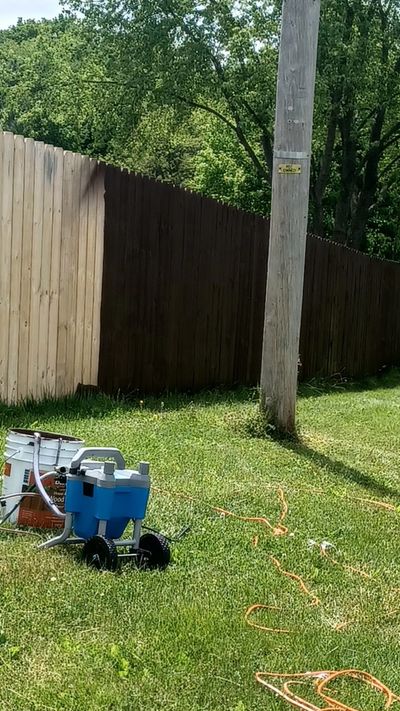
Fence Staining Contractors You Can Trust

As you can see from reading this page, painting and staining fences can be quite a tricky undertaking. If you want to do it yourself make sure you have researched everything involved. But if you want to hire a professional to take care of it for you make sure they are licensed, check references, and look at their previous work if you can.

Call Us at 330-285-3136Send a Text